Mabazza Foundation
Language of Blossoms
Language of Blossoms
Couldn't load pickup availability
Share
Language of Blossoms
Artwork Details
Medium: Oil on Canvas
Support: Mounted on supported wooden frame.
Dimensions: 24 X 18
Price: $1800.00
Edition: One of a kind
Signature: Signed
One of a kind, limited prints may be available.
Categories:
Oil • Cultural • Figurative • Fine Art • Conceptual • Expressionism • Impressionism
About This Artwork
Artwork Description
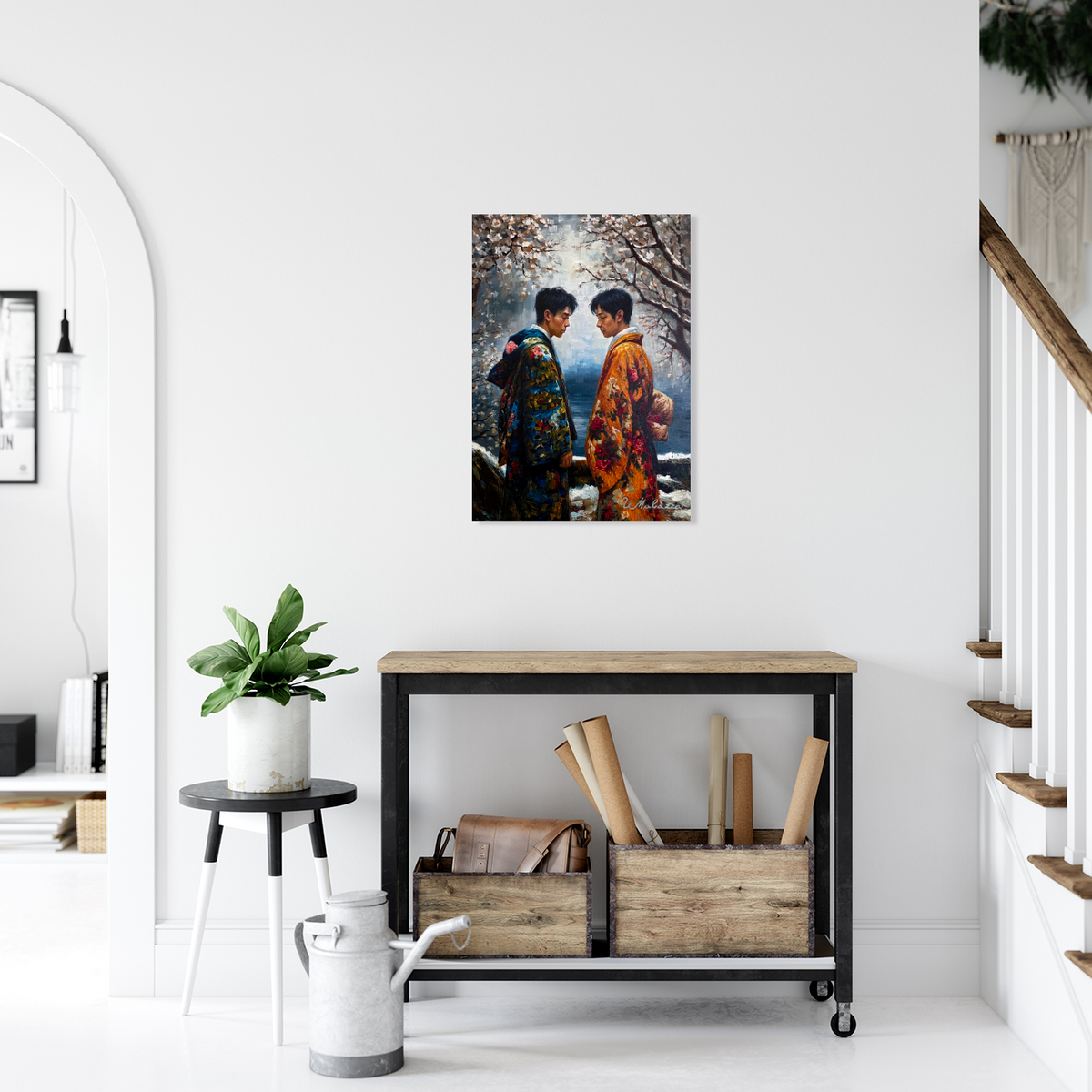
Two figures face one another beneath arching branches heavy with pale blossoms. Their richly patterned garments establish the painting’s central contrast: deep blue, green, and gold on the left; luminous orange, crimson, and cream on the right. Floral motifs travel across the fabric, echoing the flowering branches overhead and connecting the figures to the landscape around them.
Behind them, cool blue water and a softly worked gray sky create a quiet setting for their encounter. Dark branches frame their faces, while textured white blossoms and snow along the foreground bring light into the composition. Their lowered gazes and attentive postures give the scene its intimacy. The painting centers on brotherhood, expressing care and connection through the simple act of being present for another person.
Artist Statement
Language of Blossoms grew from my visit to Japan for my sister’s wedding more than twenty years ago. It was my first visit to Asia, and the experience opened an entirely new world to me. The beauty of the clothing, the richness of the traditions, and the importance of family left an impression that remains vivid today.
My sister changed kimonos no fewer than five times during the wedding celebrations. I have never forgotten the color, detail, and presence of those garments. That memory lives in the painting’s elaborate fabrics, where flowers and patterns become expressions of cultural inheritance and family connection.
At the heart of this work is brotherhood: the responsibility to care for one another and to carry shared values forward. The relationship between the two figures gives that responsibility a human form. Their quiet attention expresses the fellowship that first moved me in Japan and that I have continued to recognize in Boston’s Chinatown through shared meals, family gatherings, and everyday acts of mutual care.
This painting brings those experiences together. Its blossoms, garments, and closely balanced figures honor the bonds through which people preserve belonging across generations.