Transfiguration begins when life breaks its former shape. The ordeal may be illness, grief, fear, or loss. What matters is the human effort to gather the last reserves of strength and make a life afterward.
The body keeps the record.
Scars, exposed arms, damaged skin, and bodies breaking through walls make survival physical. The body is not a symbol untouched by pain; it is where pain has been lived.
Wings that rise again.
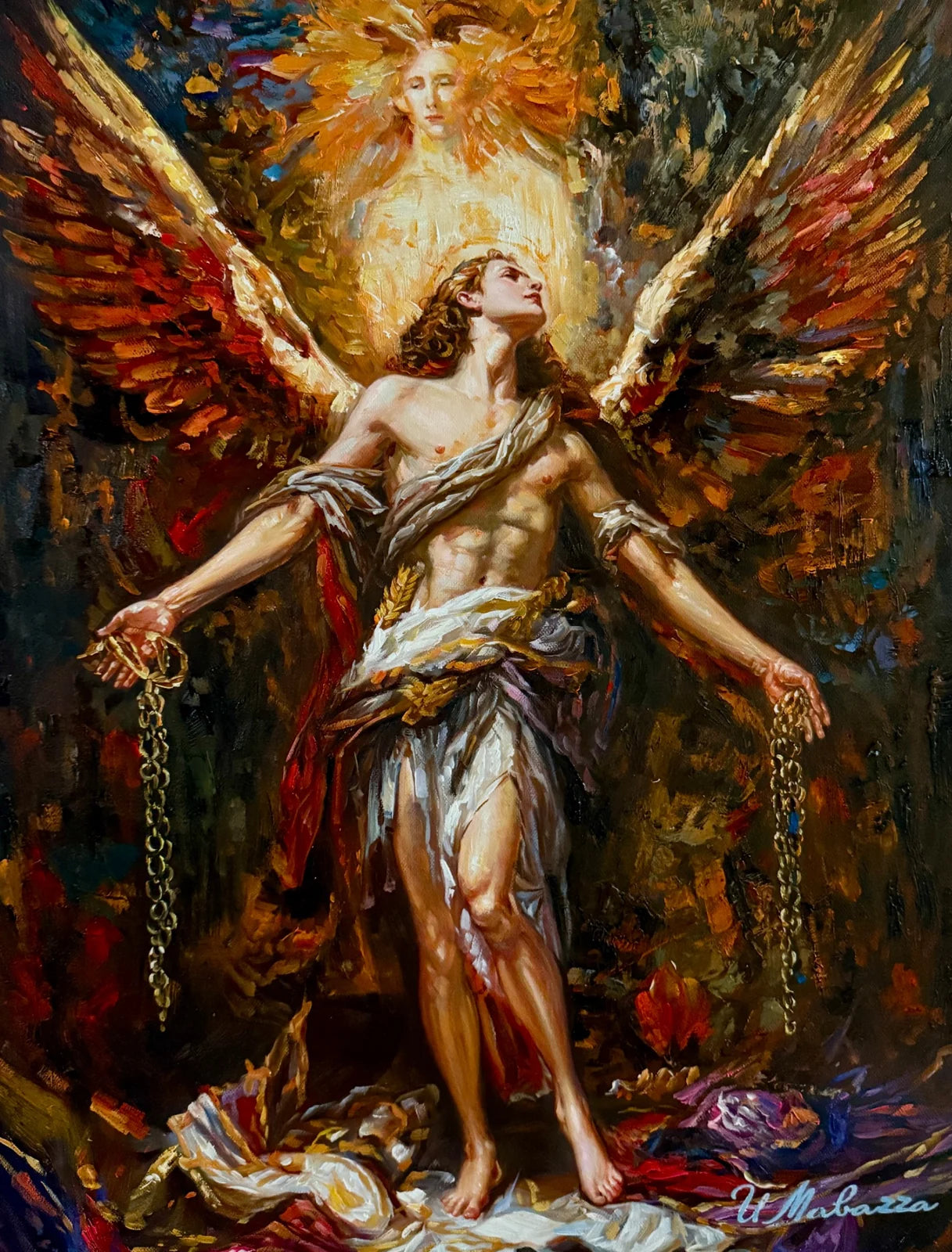
In Ascension, a winged figure holds the remnants of broken chains. Their power has ended. The rising movement from shadow toward radiance makes liberation visible.
Gold, fire, and the return of color.
Gold recalls kintsugi, the Japanese practice of highlighting pottery repairs rather than hiding them. Fire burns within a living body. In Heart in Color, the inner life flows outward in a field of pigment. In After the Rain, a golden path records the journey of healing. Repair, endurance, and beauty occupy the same world.
Each survival has its own face.
The paintings share a conviction without telling a single story: being repaired is not the same as being untouched. Each work stands on its own, carrying its own confrontation with suffering and its own reason to continue.
To become different without denying what happened.
The moment strength is found beyond exhaustion.
The visible record of wounds, repairs, and survival.
Beauty restored by the will to reach for it.